
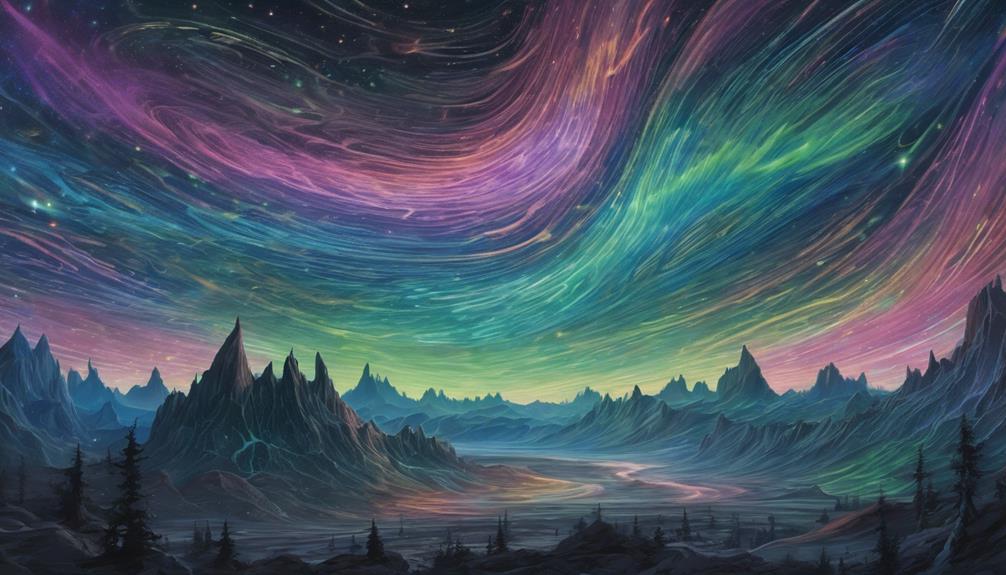
The Science Behind Natural Phenomena: From Auroras to Earthquakes
On April 2, 2023 by William GreenNatural phenomena have long fascinated humans, and understanding their underlying scientific principles is vital for mitigating their impact on our planet. Auroras are caused by the interaction of Earth's magnetic field and solar winds, while earthquakes result from tectonic stress, fault lines, and seismic waves. Volcanic eruptions stem from pressure buildup and tectonic plate movement. As we explore the science behind these natural wonders, we unravel the mysteries of bioluminescence, tornadoes, lightning, wildfires, glaciers, and meteor showers, gaining insight into the powerful forces that shape our environment. As we venture deeper, the intricate complexities of these phenomena come into sharper focus.
Unraveling the Mystery of Auroras
Unraveling the Mystery of Auroras
Auroras, spectacular displays of colored light that dance across the polar skies, have fascinated humans for centuries, yet the underlying physics governing these mesmerizing events remained shrouded in mystery until recent advances in space exploration and satellite imaging. The polar lights, a phenomenon that has captivated human imagination, have long been the subject of scientific inquiry. Researchers have made significant strides in deciphering the complex processes that give rise to these breathtaking displays.
At the heart of the aurora phenomenon lies the interaction between the Earth's magnetic field and the solar winds, high-energy particles emanating from the sun. As these particles collide with the Earth's atmosphere, they excite the atoms and molecules, causing them to emit light at specific wavelengths, resulting in the kaleidoscope of colors we observe in the polar skies. The solar winds, a stream of charged particles, are propelled towards the Earth by coronal mass ejections, powerful explosions on the sun's surface.
Recent breakthroughs in satellite imaging and space exploration have provided unprecedented insights into the dynamics of auroral activity. By monitoring the solar winds and their interaction with the Earth's magnetic field, scientists can now predict auroral activity with greater accuracy. This understanding has far-reaching implications for our comprehension of the Earth's magnetic field and its role in shielding our planet from harmful radiation. As we continue to unravel the mystery of auroras, we are reminded of the awe-inspiring beauty and complexity of the natural world.
Earth's Fury: Understanding Earthquakes
What lies at the heart of the powerful forces that shape our planet, causing the ground to tremble and landscapes to shift, as the Earth's fury releases its wrath in the form of earthquakes? The answer lies in the complex interplay of tectonic stress, fault lines, and seismic waves. As the Earth's crust is subjected to immense pressure, tectonic stress builds up, eventually culminating in the sudden release of energy in the form of seismic waves.
| Type of Seismic Wave | Speed | Effect on the Earth's Surface |
|---|---|---|
| P-Waves | 5-8 km/s | Compressional waves, causing the ground to compress and expand |
| S-Waves | 2-4 km/s | Shear waves, causing the ground to shake horizontally |
| Surface Waves | 2-4 km/s | Causes the ground to shake in a rolling motion |
As seismic waves propagate through the Earth, they can cause devastating effects, including ground shaking, soil liquefaction, and even triggering landslides. Earthquake prediction remains a significant challenge, but advances in seismology have enabled scientists to better understand the underlying mechanisms, allowing for more accurate warnings and emergency preparedness. By grasping the science behind earthquakes, we can better appreciate the awe-inspiring power of the Earth's fury, and work towards mitigating its impact on human societies.
Volcanic Eruptions: Forces Unleashed
As the Earth's crust is shaped by the forces that drive earthquakes, another powerful phenomenon, volcanic eruptions, is also propelled by the buildup of pressure beneath the surface, ultimately releasing a display of fiery fury that reshapes the landscape. The process begins with the gradual accumulation of magma in underground reservoirs, driven by the movement of tectonic plates. As the magma buildup increases, pressure builds, and the Earth's crust begins to stretch and thin. Eventually, the pressure becomes too great, and the magma is released in a spectacular display of fire and fury, as lava flows burst forth from the Earth's surface.
The intensity of a volcanic eruption is determined by the rate at which the magma is released, as well as the viscosity of the lava flows. Thick, sticky lava can lead to more explosive eruptions, while thinner, more fluid lava flows can produce more gentle, effusive eruptions. The consequences of these events can be far-reaching, shaping the surrounding landscape and affecting local ecosystems. Volcanic eruptions are a powerful reminder of the Earth's internal forces, and the awe-inspiring displays of natural fury that can reshape our planet. By understanding the science behind these events, we can better appreciate the dynamic forces that shape our world.
Bioluminescence: Glowing Wonders
In the domain of bioluminescence, nature's canvas is ablaze with a mesmerizing display of glowing wonders. This phenomenon is exemplified in the marine world, where an array of organisms, from tiny plankton to majestic squid, possess the extraordinary ability to produce light. As we explore the fascinating world of bioluminescence, we will examine the remarkable characteristics of glowing marine life and light-emitting organisms that illuminate our planet's dark depths.
Glowing Marine Life
Marine organisms, from tiny plankton to massive squid, have evolved an extraordinary ability to produce light, a phenomenon known as bioluminescence. This remarkable trait allows them to thrive in the dark, mysterious depths of the ocean, where sunlight barely penetrates. In the Deep Seas, bioluminescence is a crucial adaptation for survival, communication, and even defense.
Some oceanic wonders that exhibit bioluminescence include:
- Dinoflagellates: tiny plankton that emit a blue-green glow when disturbed
- Jellyfish: use bioluminescence to attract prey or defend against predators
- Squid: can change the color and brightness of their bioluminescent skin to communicate or camouflage
- Anglerfish: use a bioluminescent lure on their head to attract prey in the dark depths
In the vast, unexplored expanse of the ocean, bioluminescence is a beacon of freedom, allowing marine life to flourish in the dark, pressurized environment. This phenomenon reminds us of the awe-inspiring complexity and beauty of the natural world, where life finds a way to thrive even in the most inhospitable conditions.
Light-Emitting Organisms
Beyond the ocean's depths, a diverse array of light-emitting organisms has evolved to harness the power of bioluminescence, illuminating the dark and enigmatic world of glowing wonders. On land, bioluminescence manifests in fascinating forms, such as glowing mushrooms that light up the forest floor. These fungi, like the jack o'lantern mushroom, have evolved to attract insects for pollination, using their ethereal glow to lure in prey.
In certain regions, entire forests are transformed into bioluminescent wonders, where trees and plants emit a soft, blue-green glow. These enchanted forests, found in specific parts of Asia and North America, are a reflection of the incredible diversity of bioluminescent organisms. The science behind this phenomenon lies in the production of luciferin, a molecule that reacts with oxygen to produce light. As we continue to explore and understand the intricacies of bioluminescence, we are reminded of the awe-inspiring beauty that lies just beyond the reach of our everyday perception, waiting to be discovered and appreciated.
Tornadoes: Twisting Columns of Air
Rarely do atmospheric conditions converge to produce the perfect storm, but when they do, the result is a tornado, a rotating column of air that descends from a thunderstorm to wreak havoc on the ground below. These twisting columns of air are born from the collision of warm, moist air and cooler, drier air, creating areas of low pressure and rotating wind patterns.
Tornado Alley, a region spanning the central United States, is particularly prone to tornadoes due to the combination of warm, humid air from the Gulf of Mexico and cool, dry air from Canada. Wind patterns play an essential role in the formation of tornadoes, as they create areas of rotation and convergence.
- Wind shear: Changes in wind speed and direction with height create an area of rotation, known as a mesocyclone.
- Moisture: Warm, humid air from the Gulf of Mexico provides the necessary energy for thunderstorms to form.
- Cold fronts: The collision of cold, dry air with warm, humid air creates areas of low pressure and rotation.
- Low-level wind convergence: The convergence of winds at low altitudes creates a focal point for rotation, increasing the likelihood of tornado formation.
As the perfect storm of atmospheric conditions comes together, the rotating column of air touches down, bringing destruction on everything in its path. Understanding the complex interplay of wind patterns and atmospheric conditions is vital in predicting and preparing for these powerful natural phenomena.
Hurricanes: Cyclones of Destruction
Hurricanes are complex and powerful storm systems that bring catastrophic winds, torrential rains, and devastating storm surges to coastal communities. At the heart of these cyclones lies the eerily calm Eye of the Storm, a phenomenon that belies the destruction that surrounds it. As we explore the science behind hurricanes, we will examine the destructive forces at play, including the devastating impact of storm surges and the tranquil yet misleading calm at the storm's center.
Storm Surge Devastation
As the rotating mass of air known as a hurricane makes landfall, the storm surge it generates can bring about catastrophic destruction upon coastal communities, inundating homes and businesses with torrential floodwaters. The sheer force of these powerful storms can be overwhelming, leaving a trail of devastation in their wake.
Coastal vulnerability is a significant concern, as the storm surge can easily overwhelm coastal defenses, putting entire communities at risk. Effective flood mitigation strategies are essential in minimizing the impact of these powerful storms. Some key considerations for mitigating the effects of storm surges include:
- Implementing adaptive coastal zone management to reduce vulnerability
- Enhancing early warning systems to provide timely evacuation notices
- Investing in flood-control infrastructure, such as seawalls and levees
- Promoting sustainable coastal development practices to reduce risk
Eye of the Storm
While the storm surge wreaks havoc on coastal communities, the calm at the center of the hurricane, known as the eye of the storm, remains eerily still, a deceptive lull that belies the fury that surrounds it. This calm center, characterized by clear skies and light winds, is a temporary reprieve from the intense storm activity. The eye of the storm is a circular region, typically 20-40 kilometers in diameter, where the storm's rotation slows and the air sinks, creating a region of low pressure. The calmness is a result of the storm's circulation pattern, which creates a region of sinking air that suppresses cloud formation. However, this tranquility is short-lived, as the storm's intensity can quickly escalate once the eye passes. The storm intensity, measured by wind speed and central pressure, determines the severity of the hurricane's impact. Understanding the dynamics of the eye of the storm is crucial for predicting the storm's trajectory and intensity, ultimately saving lives and property.
Lightning: Electrifying the Skies
Forming a spectacular display of electrical discharge, lightning illuminates the sky with bursts of brilliant light, generating temperatures that exceed those on the surface of the sun. This breathtaking phenomenon is a proof of the awe-inspiring power of nature. But what drives this electrifying spectacle?
At the heart of lightning lies the complex process of cloud formation. Towering cumulonimbus clouds, fueled by warm air and moisture, rise to heights of over 10,000 meters. As water droplets and ice crystals collide, they generate static electricity, separating into positively and negatively charged regions. This electrical tension builds until it reaches a critical point, releasing a burst of energy as lightning.
Storm chasers, who track and study severe weather events, have long been fascinated by lightning's fury. By understanding the dynamics of cloud formation and electrical discharge, researchers can better predict when and where lightning will strike. This knowledge is essential for protecting life and property from the destructive force of lightning.
Some fascinating facts about lightning include:
- Lightning can reach temperatures of up to 30,000°C, five times hotter than the surface of the sun.
- A single lightning bolt can contain up to 1 billion joules of energy, enough to power a 100-watt light bulb for 200,000 hours.
- Lightning can strike the ground at speeds of up to 270,000 kilometers per hour, faster than the speed of sound.
- The average lightning bolt is about 5 kilometers long, but can stretch for up to 10 kilometers.
Wildfires: Infernos of Nature
Wildfires: Infernos of Nature
Raging wildfires, fueled by dry underbrush and driven by fierce winds, ignite a maelstrom of flames that reshape the landscape, leaving behind a trail of destruction and charred remains. These infernos are a manifestation of the complex interplay between Forest Dynamics and Flame Chemistry. As vegetation grows, it accumulates combustible materials, creating a tinderbox of fuel waiting to be ignited. When a spark is lit, the fire spreads rapidly, fueled by the dry underbrush and driven by winds that can reach hurricane-force speeds.
The chemistry behind wildfires is equally fascinating. Flame Chemistry comes into play as the fire consumes organic materials, releasing energy through combustion reactions. The resulting flames can reach temperatures of up to 1,500°C, hot enough to melt metal. The intense heat also creates its own weather patterns, generating firestorms that can create fire tornadoes and fire whirls.
As the fire rages on, it reshapes the landscape, creating a new ecosystem in its wake. Forest Dynamics come into play as the fire clears the way for new growth, allowing for the regeneration of vegetation and the rebirth of the forest. While wildfires may seem destructive, they are a natural part of the Earth's cycle, shaping the landscape and maintaining the delicate balance of our ecosystem.
Glaciers: Slowly Shaping the Land
Glaciers, massive rivers of ice, have been sculpting the Earth's surface for millions of years, leaving behind a legacy of unique landscapes and geological features. Through their slow and relentless movement, glaciers have carved out valleys, created lakes, and shaped mountain peaks, resulting in some of the most breathtaking and awe-inspiring natural wonders on the planet. In this section, we will explore the fascinating processes by which glaciers form and transform the landscape, and examine the lasting impact they have had on our planet's topography.
Forming Glacial Landscapes
Through a gradual process of erosion, deposition, and transformation, glaciers have been sculpting the Earth's surface for millions of years, leaving behind a legacy of unique landforms and landscapes. Glacial erosion, a powerful force, carves out valleys, creates lakes, and shapes mountain ranges. As ice caps advance and retreat, they leave behind a trail of glacial features that tell the story of their passage.
Some of the most striking features of glacial landscapes include:
- U-shaped valleys: formed by glacial erosion, these valleys are characteristic of mountainous regions
- Glacial lakes: created when glaciers carve out basins that fill with water
- Moraines: ridges of debris deposited by glaciers as they retreat
- Drumlins: elongated hills formed by the movement of ice
These features are a reflection of the incredible power of glaciers to shape the Earth's surface. As we explore the science behind these natural wonders, we gain a deeper appreciation for the dynamic forces that have shaped our planet over millions of years.
Ice Age Legacy
During the last Ice Age, massive ice sheets and glaciers scoured the landscape, leaving an enduring legacy of modified terrain that continues to influence the modern environment. The glaciers' slow, relentless movement carved out valleys, created lakes, and shaped the contours of the land. This glacial legacy is evident in the unique landforms and geological features that dot the landscape.
The study of climate history reveals that the Ice Age played a significant role in shaping our planet's geography. The massive weight and movement of the glaciers led to the formation of glacial deposits, such as moraines and drumlins, which provide valuable insights into the Earth's climatic past. These deposits serve as a window into the Earth's climate history, offering scientists a glimpse into the planet's previous states and helping us better understand the dynamics of climate change.
Today, the remnants of the Ice Age continue to shape our environment, influencing local ecosystems and affecting the distribution of plants and animals. The legacy of the Ice Age serves as a poignant reminder of the awe-inspiring power of natural forces and their lasting impact on our planet.
Shaping Mountain Peaks
Approximately 10% of the Earth's land surface has been sculpted by glaciers, which have meticulously carved out majestic mountain peaks over millions of years. The slow and steady movement of glaciers has shaped the landscape, creating unique peak formations and sculpting the terrain in their path. This process, known as mountain sculpting, has resulted in the formation of iconic mountain ranges, such as the Alps and the Rockies.
The impact of glaciers on peak formation is multifaceted:
- Erosion: Glaciers wear away the underlying rock, creating U-shaped valleys and exposing the underlying geology.
- Plucking: Glaciers pry rocks loose from the valley walls, carrying them away to deposit them elsewhere.
- Abrasion: The constant movement of the glacier acts like sandpaper, polishing and smoothing the surrounding rock.
- Deposition: As the glacier melts, it leaves behind a trail of rocks and debris, shaping the landscape in its wake.
Through this process, glaciers have played an important role in shaping the world's most breathtaking mountain peaks, a reflection of the awe-inspiring power of geological forces.
Meteor Showers: Cosmic Fireworks
Meteor showers, spectacular displays of cosmic fireworks, occur when the Earth passes through a trail of comet or asteroid debris, resulting in a mesmerizing spectacle of glowing streaks across the night sky. These events are a reflection of the dynamic and ever-changing nature of our celestial neighborhood. As the Earth orbits the sun, it encounters remnants of comets and asteroids, which burn up in the atmosphere, producing the characteristic glowing trails we see as meteors. Meteor showers also provide valuable insights into the composition of our solar system, as the particles that create these streaks often originate from the same materials that formed planets and moons. Furthermore, studying these events allows scientists to better understand asteroid impacts throughout Earth’s history, helping to uncover past events that may have shaped the planet’s surface and life forms. As we watch these radiant displays, we are reminded not only of the beauty of the universe but also of the cosmic forces that have influenced our planet for millennia.
| Meteor Shower | Peak Date |
|---|---|
| Perseid Meteor Shower | August 12-13 |
| Geminid Meteor Shower | December 13-14 |
| Orionid Meteor Shower | October 21-22 |
| Leonid Meteor Shower | November 17-18 |
The cosmic debris that produces meteor showers originates from the Stellar Nursery, a region of space where new stars and planetary systems are formed. As comets and asteroids traverse the galaxy, they shed particles that eventually become the meteoroids that create these spectacular displays. By studying meteor showers, scientists can gain insights into the formation and evolution of our solar system.
As we gaze upon the night sky during a meteor shower, we are witnessing a fleeting glimpse into the dynamic history of our celestial neighborhood. The streaks of light across the sky are a reminder of the cosmic forces that shape our universe, and the freedom to explore and understand these phenomena is a fundamental aspect of human curiosity.
Frequently Asked Questions
Can Animals Predict Natural Disasters Before They Occur?
Research suggests that animals may possess an innate ability to anticipate natural disasters, often exhibiting anomalous behavior prior to an event. This phenomenon, rooted in animal instinct, serves as a disaster warning system. By observing changes in animal behavior, such as altered migration patterns or increased restlessness, scientists can potentially identify early warning signs of impending disasters, ultimately enhancing disaster preparedness and saving lives.
How Do Scientists Measure the Magnitude of Earthquakes?
"Measure twice, cut once" is a wise adage that underscores the importance of precision in scientific inquiry. When it comes to measuring the magnitude of earthquakes, scientists rely on seismic waves to gauge the energy released during a quake. By analyzing the speed and amplitude of these waves, researchers can infer the amount of fault stress that has built up and been released, allowing them to calculate the magnitude of the earthquake with accuracy.
What Causes the Different Colors of Auroras in the Sky?
The mesmerizing display of auroras in the night sky is a result of a complex interplay between solar winds and atmospheric gases. When solar winds collide with Earth's magnetic field, they excite atmospheric gases such as oxygen and nitrogen, causing them to emit light at specific wavelengths. The varying energies of these collisions yield the kaleidoscope of colors we observe, from soft greens to vibrant reds, painting the sky with an ethereal beauty.
Can Volcanic Eruptions Trigger Earthquakes and Tsunamis?
'Calculated calm precedes catastrophic upheaval. Volcanic eruptions can indeed trigger earthquakes and tsunamis, as lava flows and magma buildup alter the Earth's crust, generating seismic waves that can travel long distances. At volcanic arcs, tectonic stress builds, increasing the likelihood of earthquakes. As the Earth's crust is stretched to the breaking point, the resulting seismic activity can release devastating tsunamis, reminding us of the awe-inspiring power that lies beneath our feet.'
Are Wildfires a Natural Part of Ecosystems and Forest Regeneration?
Wildfires are a natural and essential component of many ecosystems, playing a vital role in forest regeneration. These forest fires clear the land of debris, allowing for the growth of new vegetation and promoting ecosystem balance. In fact, many tree species rely on periodic fires to open their seed pods and stimulate germination. By embracing the natural cycle of forest fires, we can maintain the health and resilience of our ecosystems, ultimately fostering a more liberated and thriving natural world.