
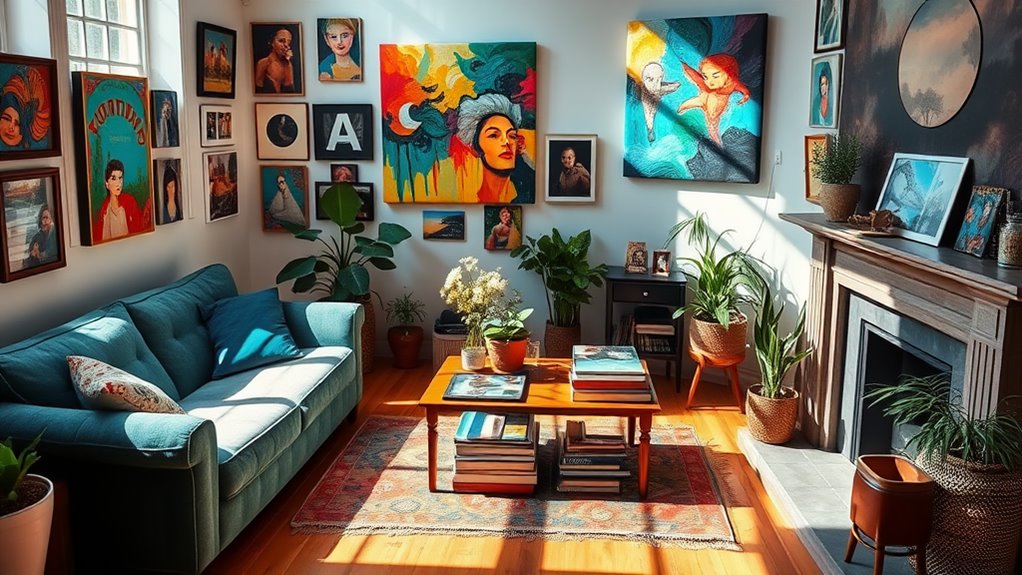
The Role of Art in Personalizing Your Living Space
On October 5, 2025 by William GreenArt plays an essential role in personalizing your living space, turning it into a reflection of who you are. It adds vibrancy, influences mood, and tells your unique story. By selecting pieces that resonate with your tastes and experiences, you create an ambiance that feels inviting and authentic. Mixing different art forms and styles, like paintings and sculptures, can build a dynamic atmosphere. Whether you create a gallery wall or showcase treasured memories, each piece deepens emotional connections. You'll find that the way you curate your space not only beautifies it but also enhances your daily experience—there's more to explore about this process.
Importance of Art in Home Design
Art plays a fundamental role in home design, transforming a space from ordinary to extraordinary. It's not merely about aesthetics; it's about creating an ambiance that resonates with your personality and vision. When you incorporate art into your living space, you're not just enhancing its beauty but also establishing a unique narrative that reflects who you are.
Think about how the right piece can influence the mood of a room. A lively painting can energize a space, whereas a serene sculpture might invite calm. By carefully selecting art, you can achieve spatial harmony, where every element within a room works together seamlessly. This balance brings a sense of peace and cohesion, making your home feel more inviting.
Don't underestimate the influence of art to evoke emotions and inspire creativity. When you surround yourself with pieces that resonate with your personal style, you create an environment that sparks joy and innovation. You can change the entire feel of a room simply by choosing artwork that complements your existing décor or serves as a focal point.
Moreover, art has the ability to connect different areas of your home. A cohesive collection can lead the eye from one room to another, guiding guests through your personal odyssey of expression. So, as you explore the realm of home design, bear in mind that art and ambiance go hand in hand. Embrace the possibilities art brings to your space, and let it enhance your home into a sanctuary of inspiration.
Choosing the Right Artwork
Selecting the right artwork can considerably improve your living space and deepen the connection between your personal style and the ambiance of your home. It's crucial to reflect on your unique tastes, the mood you want to create, and your budget considerations. Here are four key factors to guide your decision:
- Identify Your Art Styles: Explore various art styles—be it abstract, modern, or classical—until you find ones that resonate with you. Don't be afraid to mix styles; a well-curated collection can reflect your personality and create a dynamic atmosphere.
- Reflect on the Space: Think about where you'll hang or display the artwork. Large pieces can serve as striking focal points, whereas smaller works can complement furnishings. The scale and proportion should harmonize with your space.
- Color Palette: Pay attention to the colors in the artwork. Choose pieces that either align with or contrast the existing color scheme of your room. This can improve the overall aesthetic and create a cohesive look.
- Set a Budget: Determine how much you're willing to spend. Artwork varies widely in price, so setting a budget helps narrow down your options. Reflect on supporting local artists or exploring online platforms for unique, budget-friendly finds.
Incorporating Different Art Forms
Incorporating different art forms can improve your living space and add layers of interest. By mixing various types of art, you create a dynamic environment that reflects your personality and creative spirit. Consider integrating abstract sculptures into your decor. These three-dimensional pieces can serve as conversation starters and focal points, drawing attention and sparking curiosity. Choose bold colors or unique shapes that resonate with your overall theme, and place them strategically to maximize their impact.
Textile art is yet another innovative way to personalize your space. Woven wall hangings or fabric tapestries can introduce texture and warmth, softening hard surfaces and adding a cozy touch. Experiment with different colors, patterns, and materials to create visual intrigue. You might even layer textile art over a contrasting backdrop to make it pop.
Don't be afraid to mix and match these art forms. Pairing an abstract sculpture with a lively textile piece can create a harmonious balance of hard and soft elements, improving your space's aesthetic. You could as well use smaller sculptures on shelves or tables to complement larger textile displays on walls.
Ultimately, the key is to curate a collection that feels authentic to you. Embrace the opportunity to innovate and express yourself through art, transforming your living area into a personal gallery that's uniquely yours. Your home should be a canvas that reflects your style and inspires creativity, making every corner a showcase of your artistic sensibilities.
Creating a Gallery Wall
When you want to make a bold statement in your living space, creating a gallery wall is an excellent way to showcase your favorite pieces. It's not just about hanging art; it's about curating a visual narrative that reflects your style. To accomplish this, you'll want to pay attention to both your gallery layout and frame selection.
Here are four innovative steps to help you design your gallery wall:
- Choose a Theme: Decide on a cohesive theme that resonates with you. Whether it's color, subject matter, or style, a unified theme helps create harmony.
- Select Your Pieces: Gather an eclectic mix of artworks, photographs, and prints. Consider varying sizes to add visual interest, but make sure they complement each other.
- Play with Frame Selection: Frame selection can drastically change the vibe of your gallery wall. Mix and match materials—think wood, metal, and canvas—to create texture and depth.
- Plan Your Layout: Before you start hammering nails, lay out your pieces on the floor or use painter's tape on the wall to visualize your design. Experiment with different arrangements until you find a layout that feels balanced and dynamic.
Personal Stories Through Art
Art isn't just decoration; it's a reflection of your unique experience. Each piece can capture memories, express your cultural identity, and forge emotional connections. By choosing art that resonates with you, you're telling your story in a vivid and personal way.
Unique Memories Captured
Memories often fade, but art can serve as a lively reminder of those special moments in your life. Through artistic storytelling, you can create unique pieces that encapsulate your most cherished experiences, ensuring memory preservation in innovative ways. Here are four ideas to help you transform your memories into art:
- Personalized Portraits: Commission an artist to create a portrait that reflects a significant moment, like a wedding or family gathering.
- Memory Collages: Collect photos, ticket stubs, and other memorabilia, and arrange them into a colorful collage that tells your story visually.
- Custom Illustrations: Work with an illustrator to turn your favorite vacation memory into a whimsical artwork that captures the essence of that experience.
- Text-Based Art: Use quotes or phrases that resonate with you, and have them designed artistically. This could be a mantra or a line from a beloved song that evokes strong memories.
Cultural Identity Expression
Cultural identity is a rich fabric woven from personal experiences, traditions, and values. It shapes who you are and how you perceive the world. By incorporating art that reflects your heritage, you're not merely decorating your space; you're additionally expressing your unique identity representation. Each piece can serve as a potent reminder of your roots, showcasing cultural symbolism that resonates with you and your story.
Consider the following table that highlights how different art forms can encapsulate cultural identity:
| Art Form | Cultural Symbolism |
|---|---|
| Paintings | Depicting traditional scenes |
| Textiles | Patterns representing heritage |
| Sculpture | Figures honoring ancestors or deities |
When you fill your living space with such art, you invite conversations that matter. You create an environment that's not just visually stunning but also deeply personal. Your walls become a canvas of your path, reflecting the lively fabric of your cultural identity. Embrace innovation in how you display these pieces, ensuring your space tells a story that's uniquely yours.
Emotional Connections Through Art
Your living space can likewise become a canvas for personal stories, where each art piece evokes memories and emotions tied to significant moments in your life. When you curate your space with art that holds emotional resonance, you're not just decorating; you're sharing your voyage. This approach can be akin to art therapy, allowing you to process feelings and create a sanctuary that reflects who you are.
Consider these four ways to deepen your emotional connections through art:
- Select Art That Speaks to You: Choose pieces that mirror your experiences, whether it's a painting from your travels or a sculpture that represents a cherished memory.
- Incorporate Personal Creations: Display your own artwork. Creating art can be therapeutic and gives you a direct way to express your emotions.
- Rotate Art Seasonally: Change your display to reflect different phases of your life or seasonal moods, nurturing continuous emotional engagement.
- Tell a Story: Group art pieces in a way that narrates your life's voyage, inviting visitors to share in your experiences.
Maintenance and Care for Art
A well-maintained piece of art can greatly improve the ambiance of your living space. To guarantee your cherished artworks retain their beauty and value, you'll need to focus on proper maintenance and care. Start with art preservation techniques customized to the specific medium you're working with, whether it's painting, photography, or sculpture. Regular dusting with a soft, microfiber cloth can keep surfaces clean without causing damage.
When it comes to frame selection, choose materials that not just complement your art but additionally offer protection. UV-filtering glass can shield your piece from harmful light exposure, whereas acid-free mats and backing boards will prevent discoloration and degradation over time. Make sure to check the integrity of frames periodically, as warping or deterioration can jeopardize your art's condition.
Climate control plays a significant role too. Keep your artwork in a space with stable temperature and humidity levels. Avoid placing it in areas prone to moisture, like bathrooms or kitchens, as this can lead to mold or warping. If you're displaying art in direct sunlight, consider rotating pieces to minimize exposure and fading.
Finally, don't hesitate to consult a professional conservator if you notice any signs of damage. They can provide expert advice on restoration and preservation customized to your specific needs. By investing time in maintenance, you guarantee your art remains a lively and integral part of your living space for years to come.
Frequently Asked Questions
How Can Art Influence My Mood at Home?
In relation to your home, art can be the icing on the cake. The colors and themes you choose can dramatically affect your mood, thanks to color psychology. Bright hues can energize you, whereas muted tones can create calm. Art that resonates emotionally with you can turn a dull space into a sanctuary. By selecting pieces that speak to you, you'll transform your environment and uplift your spirit effortlessly.
What Types of Art Are Best for Small Spaces?
For small spaces, wall art that maximizes space optimization is key. Consider using oversized pieces that create a focal point or gallery walls with a mix of framed art and personal photos. Opt for vertical designs to draw the eye upward, making the room feel taller. Mirrors can additionally improve depth as they double as art. Innovative, functional pieces like wall-mounted sculptures or shelves can seamlessly blend form and function, adding character without crowding.
Can I Create My Own Art for Decor?
Absolutely, you can create your own art for decor! DIY art allows you to release your creative expression and make your space truly unique. Whether you paint, collage, or craft, the possibilities are endless. Think about what inspires you and let that guide your creations. It's not just about aesthetics; it's about showcasing your personality and style. So grab your materials and start experimenting with your ideas—you'll love the results!
How Often Should I Change My Artwork?
Changing your artwork regularly keeps your space fresh and engaging. Aim for art rotation every few months, aligning with seasonal updates for a dynamic feel. You can swap pieces to reflect the changing colors and moods of each season, making your environment feel alive and innovative. Trust your instincts—if a piece no longer inspires you, it's time to refresh. Keep your decor exciting, and let your creativity shine through!
Where Can I Find Affordable Art Pieces?
Visualize stepping into a treasure trove, where unique art pieces await discovery. You can find affordable art at thrift stores, where hidden gems often lie between the racks. Online marketplaces are another innovative option; they offer a vast selection from local artists and budding creators. Browse these platforms regularly, and you might uncover stunning pieces that speak to your style without breaking the bank. Get ready to transform your space with creative finds!