
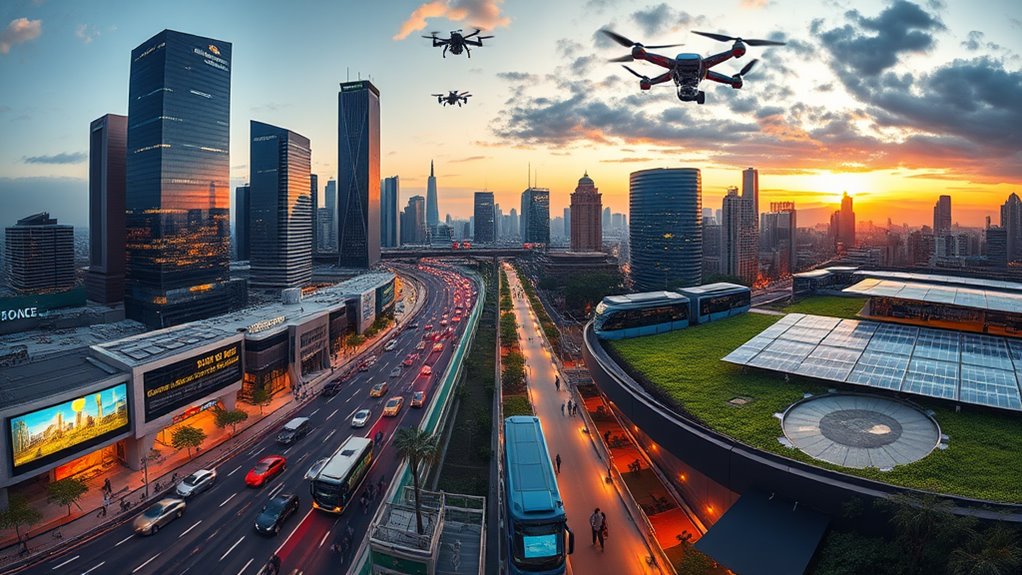
The Role of Tech in Building Smarter Cities
On June 1, 2025 by William GreenTechnology is crucial in developing smarter cities that effectively tackle urban challenges. The integration of the Internet of Things (IoT) improves operational efficiency by enabling real-time data exchange between city infrastructures. Data analytics aids urban planners in forecasting trends and improving resource allocation. Smart transportation systems, including automated traffic management, reduce congestion and improve safety. Moreover, sustainable energy innovations contribute to environmental sustainability during the promotion of livability through improved citizen engagement. Collaboration among various stakeholders is fundamental to crafting responsive urban environments. Explore further to reveal the latest trends reshaping the future of urban living.
Urbanization and Technology Integration
As urbanization accelerates globally, the integration of technology becomes significant for addressing the intricacies of modern cities. The rapid urban growth presents unprecedented challenges, requiring a paradigm shift in how we utilize technology to improve urban living. The synergy between urban infrastructure and advanced technological solutions will dictate the future of city planning and governance.
The dynamic interplay of technology and urban development offers a pathway to create efficient, resilient, and sustainable urban environments. Cities must utilize data analytics, artificial intelligence, and smart systems to optimize resource allocation and enhance public services. For instance, implementing smart traffic management systems can alleviate congestion, reducing travel times and eventually improving the economic vitality of urban centers.
Moreover, technology integration facilitates better engagement between citizens and governmental bodies. By utilizing digital platforms for public feedback and participation, cities can cultivate a sense of community ownership and inclusivity. This connectivity not only empowers residents but also guarantees that urban policies reflect the needs and aspirations of their constituents.
Incorporating technology synergy into urban design is not merely a trend; it is an imperative for securing the competitive advantage of cities in a globalized economy. As urban areas continue to grow, the strategic alignment of technology with urban planning will be indispensable in crafting cities that are not just livable but also capable of thriving in the face of future challenges. The time to act is now—cities must embrace this integration to shape a prosperous and sustainable urban future.
The Internet of Things (IoT)
The Internet of Things (IoT) represents a transformative force in urban environments, interconnecting devices and systems to boost operational efficiency and improve quality of life. As cities evolve into smart ecosystems, the integration of IoT technology is crucial, enabling real-time monitoring and management of resources ranging from traffic systems to energy consumption.
Central to the success of IoT deployments is the imperative of IoT device interoperability. This capability allows diverse devices and platforms to communicate seamlessly, ensuring that city infrastructures can adapt and respond dynamically to changing conditions. For instance, smart traffic lights can adjust their timings based on real-time vehicle flow data, greatly reducing congestion and optimizing travel times.
However, with the proliferation of interconnected devices, IoT security measures become critical. Protecting sensitive data and ensuring the resilience of urban networks against cyber threats are vital for maintaining public trust and safeguarding critical infrastructure. Cities must implement robust security protocols, including encryption, regular software updates, and thorough access controls, to mitigate vulnerabilities and fortify their smart ecosystems.
The strategic application of IoT technology not just improves operational efficiencies but also empowers citizens by providing enhanced services and environmental sustainability. As urban centers leverage the potential of IoT, they pave the way for future advancements, driving economic growth and nurturing an improved quality of life for all residents. Embracing these innovations is not merely a choice; it is a necessity for city leaders aiming to establish their urban environments as benchmarks of modernity and resilience.
Data Analytics for Urban Planning
Data analytics plays an essential role in urban planning by employing predictive modeling techniques to forecast future trends and needs. The integration of real-time data improves decision-making processes, allowing planners to respond effectively to dynamic urban environments. Furthermore, visualizing urban data trends cultivates a deeper comprehension of community patterns, ultimately guiding sustainable development initiatives.
Predictive Modeling Techniques
How can urban planners utilize predictive modeling techniques to improve city development? By leveraging the strength of predictive analytics, urban planners can transform traditional urban forecasting into a dynamic tool for strategic decision-making. These techniques utilize vast datasets to uncover patterns, enabling planners to anticipate future urban needs and challenges with remarkable accuracy.
Predictive modeling empowers planners to evaluate the potential impacts of various development scenarios, from infrastructure investments to zoning changes. By simulating different outcomes, decision-makers can prioritize initiatives that improve urban resilience and sustainability. This foresight not only optimizes resource allocation but additionally positions city leaders to proactively address issues such as traffic congestion, housing shortages, and environmental sustainability.
Moreover, predictive analytics allows for continuous refinement of urban strategies. As new data emerges, models can be recalibrated, ensuring that city planning remains responsive to changing demographics and economic conditions. In an era where urban environments are increasingly complex, the application of predictive modeling techniques emerges as a vital strategy for urban planners seeking to wield influence and encourage progressive city development. Embracing these tools is fundamental for shaping the cities of tomorrow.
Real-Time Data Integration
Integrating real-time data into urban planning processes represents a transformative approach for city officials and planners. This strategy utilizes real-time monitoring to improve decision-making, allowing for immediate responses to urban challenges. With the swiftly increasing complexity of urban environments, the ability to access and analyze live data becomes essential for effective governance.
Data interoperability is vital in this scenario, as it enables seamless communication among various data sources and systems. By cultivating a cohesive data ecosystem, city planners can synthesize information from transportation networks, environmental sensors, and public utilities, all in real time. This holistic view empowers leaders to identify patterns, allocate resources efficiently, and predict potential issues before they escalate.
Moreover, real-time data integration supports agile urban planning, allowing for quick adjustments to policies and infrastructure projects based on current conditions. This adaptability not only improves operational efficiency but additionally enhances the overall quality of life for residents. In an era where data-driven decisions are integral to urban success, utilizing real-time data stands as a significant tool for city officials aspiring to create smarter, more resilient cities.
Visualizing Urban Data Trends
As urban environments evolve, the ability to visualize data trends becomes increasingly crucial for informed decision-making in urban planning. Data visualization transforms complex datasets into accessible insights, enabling urban planners to conduct effective trend analysis. By utilizing advanced analytical tools, decision-makers gain clarity on population growth, traffic patterns, and resource allocation, eventually empowering them to design more efficient and sustainable cities.
The impact of data visualization can be illustrated through the following table, which contrasts traditional planning methods with modern data-driven approaches:
| Traditional Planning | Data-Driven Approach |
|---|---|
| Static reports | Interactive dashboards |
| Limited data sources | Extensive datasets |
| Time-consuming analysis | Real-time insights |
Incorporating data visualization techniques equips city leaders with the foresight needed to anticipate urban challenges and opportunities. By utilizing the strength of trend analysis, stakeholders can prioritize initiatives that improve livability, economic growth, and environmental sustainability. As we advance into a data-centric future, the integration of these technologies will be pivotal in crafting urban environments that respond adeptly to the needs of their inhabitants.
Smart Transportation Solutions
Smart transportation solutions are transforming urban mobility through the integration of autonomous vehicles and real-time traffic management systems. These technologies promise to improve safety, reduce congestion, and optimize travel efficiency in increasingly crowded cities. By leveraging data and automation, cities can create a more responsive and sustainable transportation network.
Autonomous Vehicle Integration
Though the promise of autonomous vehicles continues to capture public interest, their successful integration into urban settings requires a comprehensive approach to smart transportation solutions. As cities evolve, establishing robust autonomous vehicle regulations is crucial. These regulations not only guarantee safety but also cultivate public trust in these transformative technologies.
Moreover, the implementation of smart parking solutions is vital for maximizing the efficiency of autonomous vehicles. By utilizing real-time data and advanced algorithms, cities can create dynamic parking systems that facilitate seamless vehicle deployment and reduce congestion. Integrating autonomous vehicles with existing transportation infrastructure demands a strategic framework that encompasses vehicle-to-infrastructure communication, guaranteeing that these vehicles can navigate urban environments effectively.
Equally important is the collaboration among government agencies, technology developers, and urban planners. This multifaceted partnership will drive innovation and streamline the regulatory process, eventually creating a cohesive ecosystem that supports the deployment of autonomous vehicles. By prioritizing these elements, cities can capitalize on the full potential of autonomous vehicle integration, paving the way for a smarter, more efficient urban future that empowers citizens and improves mobility.
Real-Time Traffic Management
Integrating autonomous vehicles into urban environments necessitates advancements in real-time traffic management as part of a broader smart transportation strategy. The future of urban mobility hinges on the ability to optimize traffic flow and effectively respond to dynamic road conditions. Real-time traffic management systems utilize state-of-the-art technologies, such as IoT sensors and AI analytics, to gather and process vast amounts of data. This facilitates immediate adjustments to traffic signals, lane allocations, and route guidance, ensuring that congestion reduction is not just a goal but a tangible outcome.
By leveraging real-time data, cities can proactively address traffic bottlenecks, enhancing the efficiency of transportation networks. For instance, adaptive traffic signal control systems can adjust signal timings based on current traffic conditions, greatly minimizing delays. Additionally, integrating this data with autonomous vehicles enables seamless communication between cars and infrastructure, promoting synchronized movement and further alleviating congestion.
Empowered by smart traffic management solutions, urban centers can transform their transportation ecosystems, encouraging a more efficient, responsive, and sustainable mobility environment. This evolution is not merely advantageous; it is imperative for cities seeking to maintain their competitive edge in an increasingly complex urban world.
Energy Efficiency Innovations
Energy efficiency innovations are at the forefront of transforming urban settings into sustainable environments. As cities grapple with the dual challenges of population growth and environmental sustainability, the integration of advanced energy management systems becomes paramount. These systems enable city planners and stakeholders to optimize energy consumption, thereby reducing waste and lowering operational costs. The deployment of smart grids and real-time monitoring tools allows municipalities to track energy use patterns, facilitating immediate adjustments that promote efficiency.
Furthermore, the incorporation of renewable energy solutions is crucial to this transformation. Solar panels, wind turbines, and other technologies utilize natural resources, providing cities with cleaner, more reliable energy sources. By investing in renewable solutions, urban centers not only decrease reliance on fossil fuels but also improve their resilience against fluctuating energy prices and supply disruptions.
In addition to economic benefits, energy efficiency innovations contribute to improved air quality and a reduction in greenhouse gas emissions. As cities implement these technologies, they not only comply with regulatory mandates but also cultivate a reputation as forward-thinking, responsible entities in the global arena.
Ultimately, the synergy between energy management systems and renewable energy solutions establishes a robust framework for the development of smarter cities. This proactive approach not only positions urban environments as leaders in sustainability but also improves the quality of life for their residents, ensuring that energy is wielded responsibly and effectively in shaping the urban environment of the future.
Waste Management Technologies
A multitude of waste management technologies is emerging as essential tools for cities working to improve sustainability and efficiency. The integration of advanced systems not just improves waste reduction efforts but also streamlines processes from waste collection to landfill management. By leveraging innovative technologies, cities can transform waste into valuable resources, thereby promoting a circular economy.
Key advancements in waste management include:
- Waste Sorting: Automated sorting systems improve the separation of recyclables, ensuring higher purity rates and reducing contamination.
- Recycling Innovations: State-of-the-art recycling technologies, such as AI-driven sorting robots, increase processing efficiency and maximize material recovery.
- Composting Technologies: Advanced composting methods facilitate organic waste conversion into nutrient-rich compost, promoting soil health and reducing landfill dependency.
- Smart Waste Collection: IoT-enabled waste bins optimize collection routes and schedules, minimizing operational costs and environmental impact.
The adoption of these technologies empowers cities to implement effective waste management strategies that not just conform to sustainability mandates but also boost their operational capabilities. Through refined landfill management practices, cities can prolong the lifespan of existing landfills while minimizing their environmental footprint.
As cities continue to evolve into smarter urban centers, the persistent focus on waste reduction through innovative technologies will be vital. The future of waste management lies in embracing these advancements, ensuring that urban environments thrive sustainably while serving the needs of their citizens efficiently.
Public Safety Enhancements
Public safety improvements are vital for the development of smarter cities, focusing on advanced technologies that guarantee citizen safety. Smart surveillance systems play a key role by providing real-time monitoring and data analytics to detect and respond to threats effectively. Moreover, integrating emergency response mechanisms with these technologies can greatly enhance reaction times and coordination during crises, in the end promoting safer urban environments.
Smart Surveillance Systems
Integrating smart surveillance systems into urban settings transforms public safety by enhancing real-time monitoring and response capabilities. These systems leverage advanced technologies, including facial recognition, to identify and apprehend suspects swiftly, thereby instilling a sense of security among citizens. Nevertheless, the deployment of such technology raises significant privacy concerns that must be addressed to maintain public trust.
Key benefits of smart surveillance systems include:
- Proactive Crime Prevention: Utilizing predictive analytics to identify potential threats before they escalate.
- Enhanced Law Enforcement Coordination: Allowing for seamless communication and data sharing among agencies.
- Data-Driven Insights: Analyzing patterns to inform urban planning and resource allocation.
- Community Engagement: Empowering citizens with tools to report suspicious activities, nurturing a collaborative approach to safety.
While the potential for smart surveillance systems is immense, it is crucial for city leaders to balance the pursuit of safety with the protection of individual privacy rights. Thoughtful implementation, along with transparent policies, can guarantee these systems serve the greater good without infringing upon civil liberties. In the end, the effective integration of technology can redefine public safety in the modern urban environment.
Emergency Response Integration
As cities increasingly adopt smart technologies, the integration of emergency response systems stands out as a critical improvement to public safety. This integration boosts emergency communication, ensuring that information flows seamlessly among first responders, city officials, and the public during crises. Immediate access to real-time data empowers decision-makers to deploy resources effectively, greatly reducing response times.
Advanced analytics and predictive modeling play pivotal roles in disaster preparedness, allowing municipalities to anticipate potential threats and devise strategic plans. By leveraging IoT devices, cities can monitor environmental conditions, detect anomalies, and alert citizens about imminent dangers through automated notifications. This proactive approach not only minimizes chaos but also boosts community resilience.
Furthermore, integrating emergency services with smart infrastructure facilitates coordinated responses to incidents. For instance, connected traffic systems can prioritize routes for emergency vehicles, thereby expediting response and potentially saving lives. As cities evolve into smarter ecosystems, the fusion of technology and emergency response will redefine public safety, making it more robust and agile. By prioritizing these innovations, urban leaders can cultivate safer environments, asserting their commitment to the welfare of their constituents while improving their own governance capabilities.
Sustainable Infrastructure Development
A growing number of cities are recognizing the critical importance of sustainable infrastructure development in addressing environmental challenges and improving urban living conditions. This shift toward sustainability is merely a trend; it is a strategic necessity for urban centers aiming to thrive in an increasingly resource-constrained world. As cities embrace advanced technologies, they can effectively integrate sustainable practices into their infrastructure.
Key elements of sustainable infrastructure development include:
- Green Building Initiatives: Designing structures that minimize energy consumption and utilize sustainable materials.
- Renewable Resources Utilization: Capturing solar, wind, and other renewable energy sources to energize urban systems.
- Smart Waste Management: Implementing technology-driven strategies to reduce waste and promote recycling.
- Sustainable Transportation Networks: Establishing efficient public transit systems that encourage reduced reliance on fossil fuels.
The integration of technology in these areas is paramount. With the advent of smart technologies, cities can optimize energy use, improve building efficiency, and create more resilient, adaptive infrastructures. For example, smart grids and energy management systems allow for real-time monitoring and optimization of energy distribution, greatly reducing carbon footprints. Additionally, the adoption of green building practices addresses immediate environmental concerns while also improving the aesthetic and functional appeal of urban spaces.
Citizen Engagement Through Tech
The evolution of sustainable infrastructure development sets the stage for improved citizen engagement, as technology enables residents to take an active role in shaping their communities. The integration of digital platforms has transformed how local governments interact with their constituents, cultivating a culture of civic participation that is both dynamic and responsive.
Through the use of mobile applications and social media, municipalities can gather community feedback in real-time, allowing officials to make informed decisions that align with the desires and needs of the populace. Online forums serve as essential spaces for dialogue, enabling residents to voice their opinions and influence urban planning initiatives. Public consultations, once limited to traditional town hall meetings, are now improved through digital channels that facilitate broader participation.
Strategically leveraging engagement strategies that incorporate technology not only boosts transparency but also builds trust between citizens and their governments. The ability to mobilize diverse voices guarantees that development efforts are inclusive, addressing the unique challenges faced by different demographics within the community.
Moreover, technology streamlines the process of gathering insights and data, creating a feedback loop that continuously informs city planning and services. As cities aim for smarter solutions, the influence of citizen engagement through tech becomes indispensable, transforming urban environments into lively spaces that reflect the aspirations of their residents. In the end, this collaborative approach enriches the democratic process and strengthens the foundations of a truly engaged society.
Challenges in Smart City Implementation
What obstacles must cities overcome to successfully implement smart technologies? The expedition towards establishing smart cities is fraught with challenges that demand strategic foresight and resilient execution. City leaders must navigate complex environments to utilize the full potential of emerging technologies.
- Inadequate Policy Frameworks: Many municipalities lack thorough policies that address the integration of smart technologies with existing infrastructure.
- Funding Models: Innovative funding strategies are fundamental to secure the necessary financial resources for large-scale smart city initiatives.
- Data Privacy and Security: As cities increasingly rely on data, establishing stringent security measures to protect citizens' information becomes imperative.
- Interoperability Issues: The successful implementation of smart technologies often hinges on the ability of disparate systems to communicate and function cohesively.
To achieve a seamless shift to smarter urban environments, city officials must prioritize the development of inclusive policy frameworks that support innovation while safeguarding public interests. Furthermore, the formulation of diversified funding models is vital to attract investment from both public and private sectors.
Moreover, addressing data privacy concerns head-on will build trust among citizens, nurturing community engagement essential for the success of any smart city initiative. Finally, ensuring interoperability among various technological systems will facilitate a more integrated and efficient urban ecosystem. By overcoming these challenges, cities can release the transformative influence of technology, ultimately leading to improved quality of life for all residents.
Future Trends in Urban Tech
As cities navigate the intricacies of implementing smart technologies, attention is increasingly shifting in the direction of the future trends that will shape urban environments. The convergence of urban mobility and green technology stands at the forefront of this transformation, promising a more sustainable and efficient urban experience.
One of the most compelling trends is the rise of integrated mobility solutions that utilize data analytics and artificial intelligence to improve transportation networks. Urban mobility will evolve into a seamless experience, where users can access various modes of transport—ranging from electric vehicles to bike-sharing platforms—through a single digital interface. This shift not only optimizes traffic flow but likewise reduces congestion, thereby improving air quality and diminishing the carbon footprint.
Furthermore, the integration of green technology will play a pivotal role in urban development. Smart grids energized by renewable energy sources will become the backbone of city infrastructure, enabling real-time energy management and reducing reliance on fossil fuels. Innovations such as vertical gardens and green roofs will contribute to urban biodiversity while providing natural insulation for buildings.
The future of urban tech also hinges on community engagement and participatory governance, ensuring that citizens are active stakeholders in shaping their environments. By prioritizing these trends, city leaders can leverage technological advancements that not only improve urban living standards but additionally cultivate resilient, eco-friendly communities. As we look ahead, the symbiosis of urban mobility and green technology will unequivocally define the smart cities of tomorrow.
Frequently Asked Questions
How Do Smart Cities Impact Local Economies and Job Creation?
Smart cities substantially improve local economies and stimulate job creation by encouraging an environment conducive to local innovation and workforce development. By integrating advanced technologies and sustainable practices, these urban centers attract businesses and talent, leading to increased investment. This, in turn, cultivates a skilled workforce, empowering individuals with new opportunities and driving economic growth. Ultimately, smart cities serve as a catalyst for revitalizing local economies and creating a dynamic environment for employment.
What Are the Privacy Concerns Related to Smart City Technologies?
Recent studies indicate that approximately 60% of urban residents express concerns over the privacy implications of smart city technologies. Central to this apprehension are issues of data security and surveillance ethics, as cities increasingly deploy sensors and data analytics to improve urban living. The potential for misuse of personal information raises critical questions about consent and accountability, necessitating robust frameworks to balance technological advancement with the fundamental right to privacy.
How Can Citizens Contribute to Smart City Initiatives?
Citizens play a pivotal role in advancing smart city initiatives through active community engagement and providing valuable citizen feedback. By participating in local forums, surveys, and collaborative projects, residents can voice their needs and preferences, ensuring that urban development aligns with their aspirations. Additionally, leveraging technology to facilitate communication encourages transparency and inclusivity, empowering citizens to take ownership of their environment as they influence decision-makers to adopt more responsive and adaptive strategies.
What Are the Costs Associated With Implementing Smart City Technologies?
Implementing innovative initiatives incurs intricate investments. The costs associated with smart city technologies encompass substantial implementation challenges, ranging from infrastructure upgrades to stakeholder engagement. Funding sources, including public-private partnerships and government grants, are crucial to alleviate financial burdens. Additionally, ongoing operational expenses necessitate careful budgeting to guarantee sustainability. Strategic planning and resource allocation are paramount for successfully maneuvering these challenges, ultimately enabling cities to embrace transformative technological advancements.
How Do Different Countries Approach Smart City Development?
Countries exhibit varied approaches to smart city development, often shaped by their unique socio-economic contexts. Some nations prioritize extensive smart city frameworks, emphasizing sustainability and citizen engagement, whereas others focus on technological innovation or infrastructure improvement. Global partnerships play a critical role in facilitating knowledge exchange and investment, enabling countries to leverage best practices and accelerate their smart urban initiatives. This collaborative approach cultivates resilience and adaptability in an increasingly complex urban environment.